Through my studies this semester, in both Social Innovation and Child and Family Advocacy, I have learned and connected so much between my faith as a Christian our need to serve and work toward becoming better as individuals and as communities, and even beyond our own communities. With all of the political and civil unrest in our communities and across the nation right now, we need to further hone in on our own humanity, our love of our Savior, and opportunities that we can emulate His example.
This week's studies in my Social Innovation course gave me an opportunity to reflect on connecting my social awareness with my faith. Here are some thoughts that I had time to think and write on this week:
Joseph Smith said, "A man filled with the love of God is not content with blessing his family alone, but ranges through the whole world, anxious to bless the whole human race.” As we learn about the atonement of Jesus Christ, we deepen our understanding that we are all children of the same God, that we are brothers and sisters. As we emulate the Savior and strive to become disciple leaders we naturally expand our capacity and desire to bless others. As our "spiritual buckets" are filled, our desire to share the peace and joy and happiness with all others grows. The more we bless others, the more capacity we have to continue to bless even more.
Social innovation is a form of true discipleship to Jesus Christ. As we use our gifts and talents, we can innovate and make efficient and effective ways to serve others. As we have learned, through service where we can encourage and enable self-reliance, we are emulating the service the Savior taught and gave.
Social innovation is a key component to building Zion, as we strive to become "one heart and one mind," we use our strengths and skills to lift another and help them become self-reliant, which, in turn, gives them the foundation and then opportunities to serve as well. Throughout the history of the Restoration, we see social innovation - from the handcart companies to the perpetual education fund, from the early days and purpose of the Relief Society to the present-day mission of the same organization.
The connection of all that we have learned this semester to the principles of the Gospel is very relevant and has the opportunity to strengthen our testimonies of service, of yearning for Zion, and of the Atonement. As we connect our secular lives with our religious lives, we are able to bring ourselves closer to the Savior and closer to becoming a "Zion people."
My life and the world around you through the lens of social innovation has brought me closer to Christ. My perspective has been enlightened and changed substantially this semester. As I am working towards a career change as well as big changes in our family structure (with 3 kids leaving for college this fall) I am aware and seeking opportunities to use my skills. I have reflected throughout the semester on the Social Innovation pyramid and where I fit. I am striving to keep an open mind and heart, to listen to the guidance of God to make a difference. With the perspective of being a disciple of Christ as I am learning and seeking, I know that I will be able to touch and change lives. It may be "the one," or it may be masses - I have great untapped potential and am open and excited to see where God guides my journey as I am drawing nearer to my degree in Marriage and Family Studies
As I have walked through the past few years of change and growth, much of which I didn't (and wouldn't have) chosen, but am grateful for the opportunities that have been opened for me. For the first time in my life I turned much of the decision making in my life over to my Father in Heaven and allowed Him to guide me, rather than me forging through and occasionally checking in to make sure I was on the right path. I have visualized Him laying the bricks in the path for me as I tentatively take each step forward. As I approach a crossroads, I am leaning into my faith (rather than my fear) that he will guide the next steps. I will be graduating this winter and while I am currently waiting on a call back for THE job that I have been waiting and working for - as an Academic and Career Advisor, I am also leaning into the possibility that THIS isn't what I have been trained for and that I will need to further expand my horizons and continue to seek what God wants and needs me to do. This is something that I am not very good at, and have accepted that I am actually very fearful of.
The opportunity to reflect, learn, grow and become an advocate for families and children, and to begin to realize what other opportunities and roles may be out there for me has been amazing (and so scary.) I know that God has big things in store for me. As I have worked on my patience, looked for opportunities to learn and grow, I have gained so much - in my relationship with my Savior, in my outlook and my realization of my mission and my potential.
Saturday, July 18, 2020

Saturday, July 11, 2020
Self Reliance
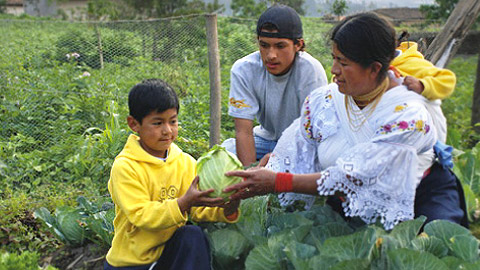
As a member of the Church of Jesus Christ of Latter-day Saints, I have long loved and appreciated the church's perspective and aid in seeking to help all that need it, but involving self-reliance, both in word and in deed, to help the people benefiting from welfare to truly benefit so as to be able to provide for themselves.
The church teaches "A mere desire to become self-reliant is not enough. We must make a conscious, active effort to provide for our own needs and those of our families. 2 Bishop H. David Burton, Presiding Bishop, reminds us that when we have done all we can to be self-reliant, “we can turn to the Lord in confidence to ask for what we might yet lack.” 3 Being self-reliant allows us to bless others. Elder Robert D. Hales of the Quorum of the Twelve Apostles says, “Only when we are self-reliant can we truly emulate the Savior in serving and blessing others.”"
Through my experience, including a time that we needed the church's assistance to make ends meet and to feed our young family, and through serving others that have been in need, I truly feel and believe the truth of the statement Elder Hales made.
I am particularly thankful for the blessings I have gained and the understanding I have of the church's intent and guidance in self reliance. You can learn more about the Church's welfare plan at: Catching the Vision of Self-Reliance. It teaches that: "
Saturday, July 4, 2020
Social Innovation: Impact
How can we magnify our impact? Investing in companies that are measurably helping to solve global issues wins you not just brownie points, but financial returns too. (Impact Investing is hot right now.)
It is also the intentional marriage of profit and values. Taking something out of our "investment portfolios" that are not aligned with our values. While we can talk about literal investment portfolios, it is important to consider our daily investments - things like patronizing locally owned supplied and sourced companies to keep your dollars in your local community. Another way is to be aware of organizations committed to impact investing - companies, organizations, and funds with the intention of generating financial returns AND measurable social and environmental impact.
Muhammad Yunus would like poverty to only exist in museums. Is that possible?
"I thought that if I were to lend money to the poor, than the villagers could be free from the grasp of the loan sharks. This is what I did. I never imagined that it would become my calling in life." ~Yunis

"Poverty is not created by the poor people. It is imposed on the poor people by the system that we created. Sometimes I give the analogy of a bonsai tree. You take the seed of the tallest tree in the forest and you put it a flower pot: only a small, one meter high tree will grow. We call it bonsai. It looks very cute. But it doesn't grow tall. What is the problem? We didn't give it enough soil to grow.
Poor people are bonsai people. There is nothing wrong with the seed. Society simply never gave them the space so that they can grow as tall as anybody else. A lack of money equates to a lack of space.
We need to give poor people access to technology, education, training, finances, health care, in return for a payment. We are not talking about giving them everything free. We don't give them a free loan. They have to pay it back. But in the meantime, they are changing their lives. Everything else can be done in that way. That's social business. Once we do that, there should be no reason why people should be poor."
It's happening. We will reduce poverty by half by 2015 and concrete results are emerging. It could be much easier; technology is making it easier. I not only think that we should put poverty in a museum. By 2030 and beyond, we should be thinking about creating a society without unemployment too. Why should anybody be unemployed? There is nothing wrong with the person! We created a faulty system, and that reflects on us. We are being punished for designing a faulty system.
We are educated people. We should be creating things to enjoy for everybody so that creative power is not locked up in an unemployed person."
Banishing poverty to a museum is a lofty goal. Yunus' vision is admirable and has made measurable impact in the world. The component of what he is suggesting is combating the "natural man" and the complications of mental illness and substance abuse. Combining the impact of social investing impact to include the vast array of why people live in poverty is important.
Saturday, June 27, 2020
Social Innovation: Hybrids and Social Business

What's the difference?
"A Social Business is a company created for social benefit rather than private profit. Like an NGO, it has a social or environmental mission, but like a business, it generates its own revenues to cover its costs. Investors may recoup their initial investment, but all further profits are reinvested for growth and innovation, or to seed new social business ventures. In this way, Social Business introduces an additional business model to capitalism where serving society is the sole objective of the company. Since social businesses have to compete in the free market to provide their goods or services, they are efficient and effective at meeting customer needs. "
Peter Singer asks us
- How much of a difference can I make?
- Should I abandon my career and put all my time towards an effort?
- Isn't charity bureaucratic and ineffective anyway?
- Isn't it a burden to give up so much?
The answers he gives to these questions may interest and surprise you!
If you're lucky enough to live
without want, it's a natural impulse to help others in need. But, asks
philosopher Peter Singer, what's the most effective way to give charitably? He
talks through some surprising thought experiments to help you balance emotion
and practicality -- and make the biggest impact with whatever you can share. Check out what he has to say about "The why and how of effective altruism."
What is it about hybrids between social and traditional businesses that make them so successful? The success and benefits create a cycle of success. More success creates more success. Positive self-worth creates opportunity, optimism, and productivity. Organizations that are self-sustaining enrich and encourage further actions that help the orgnization, and the people and communities involved. While there are unique challenges arise due to legal, administrative, financial and other reasons, the opportunities of social and traditional hybrid businesses can be uniquely beneficial because they can solve multiple levels of threats and problems by their ingenuity, their social make-up and their missions.
Subscribe to:
Posts (Atom)